
Leadership, Pressure, and Two Gallons of Milk
Leadership, Pressure, and Two Gallons of Milk

People often ask me why I am so passionate about Leadership Poise.
The answer isn't found in a book.
It isn't found in graduate school.
It isn't found in a leadership seminar.
It's found in two gallons of milk.
Years ago, my wife and I owned several Cold Stone Creamery stores.
If you've ever worked in food service, you know Saturday mornings aren't just busy. They're organized chaos.
One Saturday, we were preparing for the rush. Ice cream needed to be stocked. Mix-ins needed to be filled. The crew was moving quickly.
And I was already running hot inside.
My wife had gone to pick up additional supplies. When she returned, several crew members and I went outside to help unload the SUV.
I opened the rear hatch.
A gallon of milk fell out.
It hit the pavement and exploded.
Milk splashed across the parking lot, across my shoes, across everyone's legs.

And then something inside me exploded too.
Without thinking, I kicked what was left of the gallon across the parking lot.
Then I did something even worse.
I reached into the SUV, grabbed the second gallon of milk, and threw it as hard as I could across the parking lot.
The first gallon hit the ground by accident. The second gallon didn’t.
Then...
Silence.
I turned around.
My wife was standing there.
My employees were standing there.
Nobody said a word.
They didn't have to.
Their faces said everything.
"What just happened?"
"Is this really our leader?"
And that's when it hit me.
The moment I turned around, I wasn't looking at my wife and my employees.
I was looking in a mirror.
For the first time, I saw myself through the eyes of the people I was leading.
And I didn't particularly like the leader looking back at me.
I Thought I Had a Stress Problem
For years, I thought the villain in that story was stress.
Or maybe anger.
I was wrong.
The real villain had been quietly living inside me long before that gallon of milk ever hit the ground.
The villain was fragmentation—the gap between the leader I wanted to be and the leader pressure revealed me to be.
My head knew better.
My heart wasn't settled.
My habits hadn't caught up with either one.
The milk wasn't the problem.
The pressure wasn't the problem.
The busy Saturday wasn't the problem.
Those things didn't create my reaction.
They exposed it.
That's one of the uncomfortable truths about leadership: pressure often reveals what ordinary circumstances allow us to hide.
That morning, I didn't lose my composure.
I lost the illusion that I had it.
And that distinction has shaped the way I think about leadership ever since.
Leaders Can Separate Too
There's something interesting about milk that I didn't appreciate at the time.
Left alone, milk naturally separates. The cream rises as the fat separates from the rest.
That's why milk is homogenized.
Homogenization breaks the fat into tiny droplets and distributes them more uniformly throughout the milk, helping prevent that separation.
And I've come to believe leaders can separate too.
What we believe can separate from how we behave.
What we value can separate from how we react.
What we say can separate from what people actually experience from us.
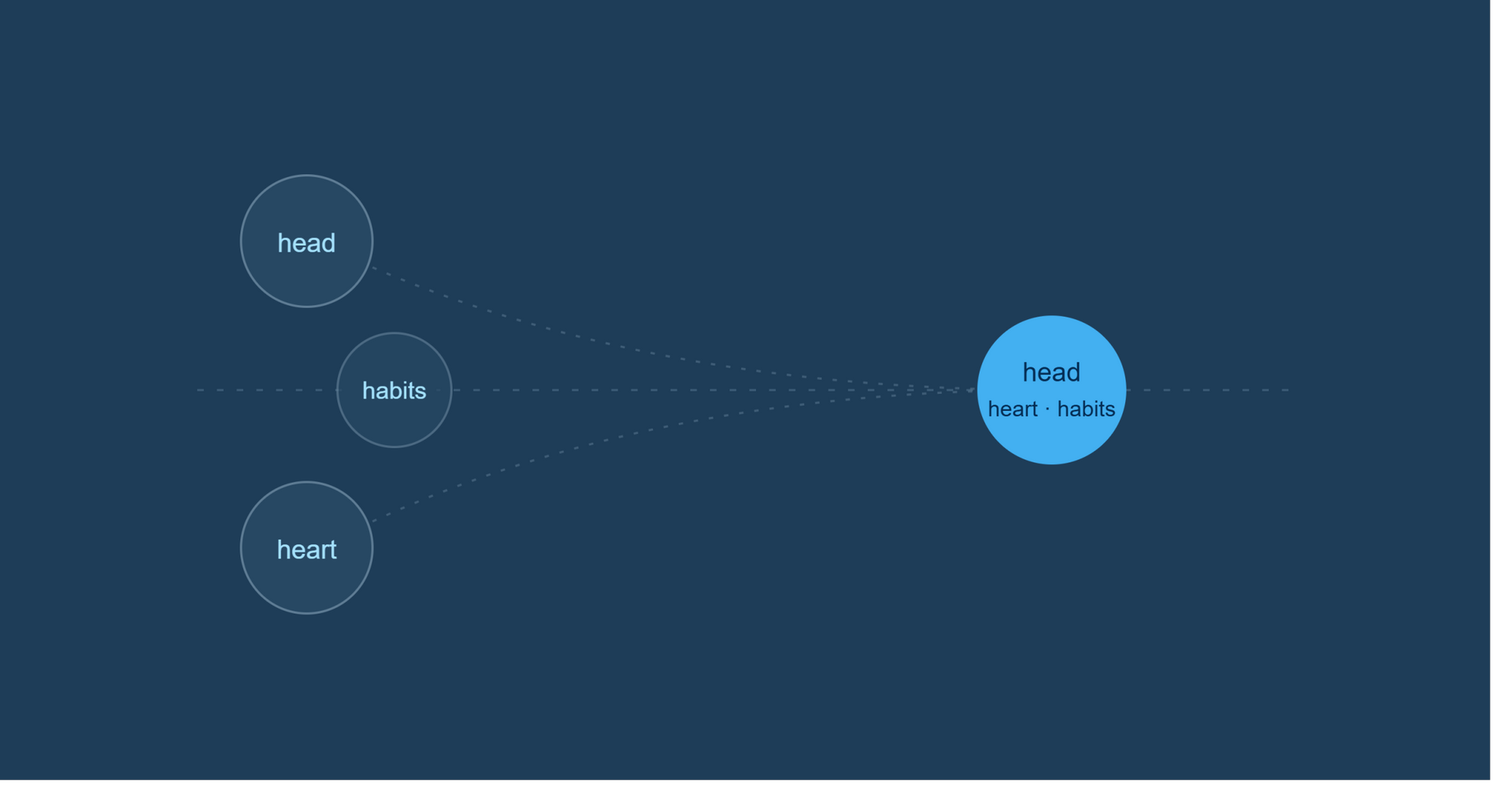
Our head can move in one direction.
Our heart in another.
Our habits somewhere else entirely.
That's fragmentation.
And pressure has an extraordinary ability to expose it.
Leadership Poise is the work of bringing those parts of ourselves back into alignment—aligning our head, heart, and habits so that who we become under pressure increasingly resembles who we say we want to be.
Poise isn't pretending pressure doesn't exist.
It isn't suppressing emotion.
And it certainly isn't perfection.
Poise is alignment.
Your Internal State Doesn't Stay Internal
That Saturday taught me something else.
My reaction didn't end with me.
The moment I lost control, everyone around me changed.
People became tense.
People became cautious.
The atmosphere shifted.
No policy had changed.
No strategy had changed.
No vision had changed.
The leader had changed.
And the environment changed with him.
That's one of the realities of leadership we sometimes underestimate:
People don't just hear leaders. They absorb them.
Our composure is contagious.
Unfortunately, so is our fragmentation.
Our attitudes, emotions, behaviors, standards, and reactions send signals to everyone around us about what is normal, what is safe, and what is expected.
Leadership always leaves an emotional wake.
The question is what kind.
Learning From Spilled Milk
Proverbs 16:32 says:
"He that is slow to anger is better than the mighty; and he that ruleth his spirit than he that taketh a city."
I used to think primarily about self-control when I read that verse.
Today, I also see internal governance.
Before we can lead others well, we must learn to lead ourselves well.
I wish I could go back and handle that Saturday differently.
I can't.
But that's the difference between telling a story from an open wound and telling it from a scar.
The scar reminds me of what I learned.
I grew.
I changed.
And I've never looked at a gallon of milk the same way again.
There's an old saying:
Don't cry over spilled milk.
I'd add something to it.
Don't just move past spilled milk. Learn from it.
Because sometimes the moments we wish hadn't happened become the moments that tell us the truth about ourselves.
I thought I had a milk problem.
I discovered I had an alignment problem.
But here's the question that still stays with me:
What if that gallon of milk had never hit the ground?
I might have spent the rest of my life believing I was a better leader than I actually was.
The greatest gift pressure gave me wasn't another leadership lesson.
It was an honest introduction to the leader I had become.
Reflection
What has pressure introduced you to lately?
And perhaps the more important question:
Do you like the leader you've met?