
Leadership Poise Improves Decision Quality
Leadership Poise Improves Decision Quality

The quality of your leadership is ultimately measured by the quality of your decisions.
When we think about great leaders, we often admire their confidence, vision, or charisma. Yet history tells a different story. Organizations rarely fail because leaders lack intelligence. They fail because capable leaders make poor decisions at critical moments.
Consider Kodak dismissing digital photography. Blockbuster passing on Netflix. Countless executives doubling down on failing strategies long after the evidence suggested they should change course.
These weren't foolish people. They were accomplished, experienced leaders.
So, what happened? The answer may be less about intelligence and more about poise.
We Think Decisions Are Rational. They're Not.
Most leaders like to believe they make decisions objectively. They gather data, analyze options, weigh risks, and choose the best path.
In reality, our decisions are filtered through an invisible lens long before we ever evaluate the facts.
- Our ego influences what we want to be true.
- Our emotions determine what we notice.
- Our past experiences shape what we expect to happen.
- Our identity affects which ideas we defend.
By the time we think we're making a rational decision, our perception has already been influenced by countless psychological forces.
This is why the Harvard Business Review article, "Why Good Leaders Make Bad Decisions," remains so relevant. The authors argue that poor decisions are rarely caused by a lack of intelligence. Instead, they emerge from predictable distortions in human judgment.
They identify three primary culprits:
- Self-interest, where protecting our reputation becomes more important than pursuing the best outcome.
- Emotional attachment, where we become committed to ideas, people, or strategies long after they have stopped serving the organization.
- Misleading memories, where previous successes convince us that today's situation is more familiar than it really is.
These distortions don't simply influence our decisions. They influence what we perceive as reality.
Leadership Poise Begins Before the Decision
This is where I believe the conversation needs to evolve.
Most leadership advice focuses on improving the decision-making process. We are told we need better meetings, better data, better analysis and better debate.
Those are all valuable. But what if the greatest leverage point isn't the process?
What if it's the leader?
Before leaders evaluate the situation, they must first manage themselves.
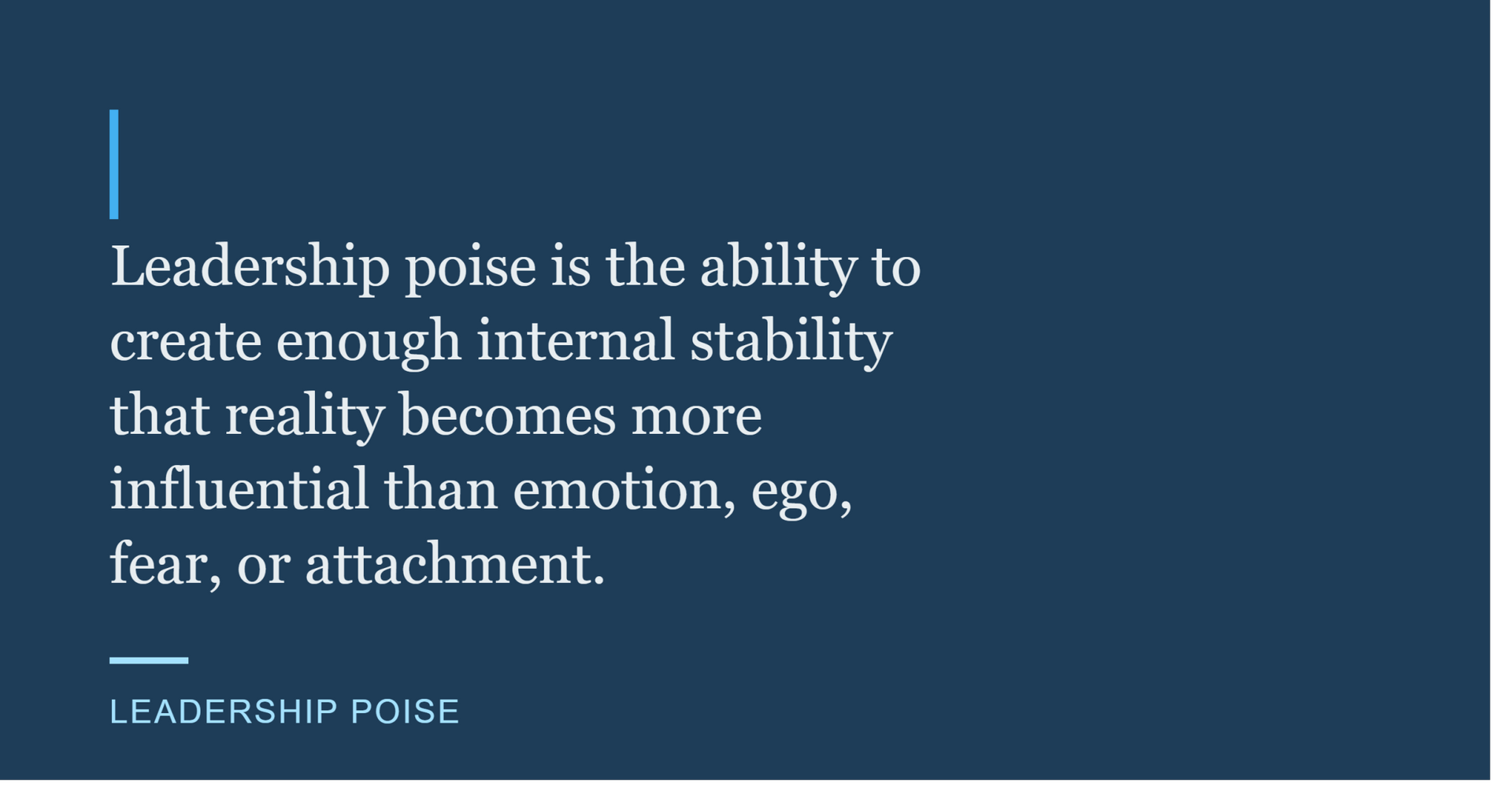
Leadership poise is the ability to create enough internal stability that reality becomes more influential than emotion, ego, fear, or attachment.
It is the discipline of seeing clearly before acting confidently.
This shifts poise from being a communication skill to becoming a decision-making capability.
Poise Creates Better Perception
We often say that leaders need clarity. However, clarity doesn't begin with information. It begins with perception.
A leader consumed by anxiety sees threats everywhere. A leader driven by ego sees confirmation instead of contradiction. A leader attached to yesterday's success overlooks tomorrow's opportunities.
Poised leaders don't possess better eyesight. Instead, they possess fewer internal distortions. They regulate themselves first and are therefore better able to recognize what is actually happening instead of what they hope, fear, or assume is happening.
In many cases, the quality of a decision is determined long before anyone enters the conference room.
The Decision Before the Decision
Every leadership decision is preceded by another decision that rarely gets discussed.
Will I defend my position...or discover the truth?
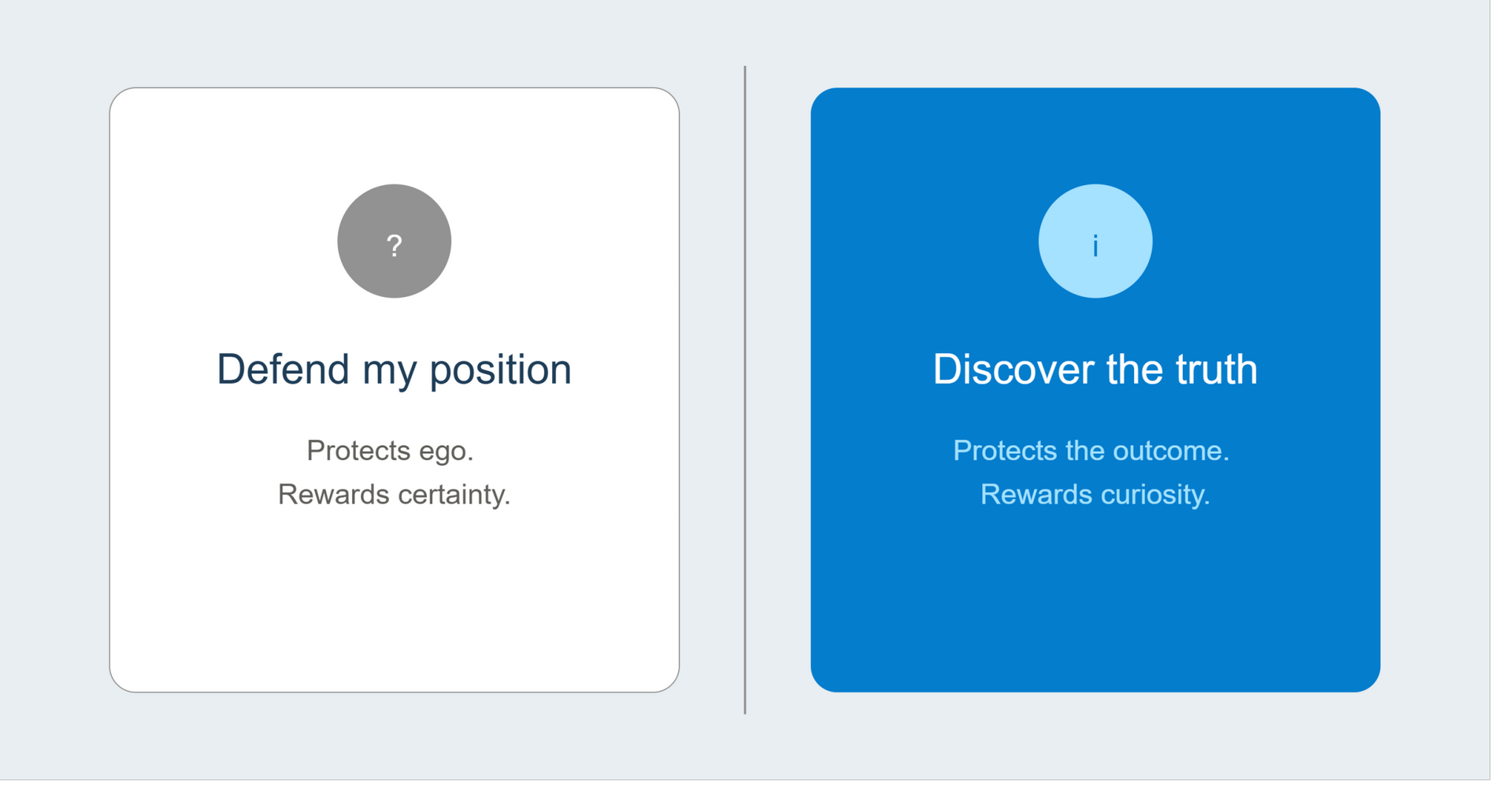
That question determines everything that follows.
Poised leaders consistently choose curiosity over certainty. They become students before becoming advocates. They seek disconfirming evidence instead of surrounding themselves with agreement.
They ask,
- "What am I missing?"
- "What evidence would change my mind?"
- "Am I protecting the organization—or protecting my ego?"
These questions require humility. Humility is not weakness. It is the willingness to let reality win.
Poise Creates Better Cultures, Not Just Better Leaders
Leadership decisions never occur in isolation.
Every decision either strengthens or weakens organizational culture.
Leaders who react emotionally create emotional contagion. Leaders who defend themselves create defensive teams. Leaders who punish disagreement eliminate the very information they need most.
Conversely, poised leaders create psychological safety because they are not threatened by opposing viewpoints.
They invite dissent, they reward thoughtful disagreement, and they separate criticism of ideas from criticism of people.
Over time, this creates a culture where truth travels faster than politics. When truth moves freely, better decisions follow.
One of the Hidden Benefits of Leadership Poise
Leadership Poise has always been about alignment by aligning the head, heart, and habits so leaders remain steady when everything around them is changing.
One of the often-overlooked benefits of that alignment is better judgment.
When leaders think clearly, regulate emotion, and remain anchored to their values, they are less likely to be driven by ego, fear, or impulse. They perceive reality more accurately and respond more intentionally.
Leadership Poise doesn't eliminate bias and it doesn't guarantee perfect decisions. Rather, it improves the conditions in which better decisions are made, which goes far beyond decision-making.

It improves the conditions for stronger relationships, healthier communication, for greater trust, for resilient teams, and for aligned cultures.
In other words, Leadership Poise doesn't simply help leaders perform better. It helps every leadership capability perform better.
Reflection
As leaders, we often ask ourselves:
"What's the right decision?"
Perhaps a better question comes first.
"What within me might be preventing me from seeing the situation clearly?"
Because the greatest threat to good leadership isn't a lack of intelligence.
It's the inability to recognize when our own thinking has become distorted.
Leadership poise doesn't guarantee perfect decisions. However, it dramatically increases the likelihood that our decisions will be guided by reality rather than reaction.
In a world defined by uncertainty, complexity, and constant change, that may be one of the greatest competitive advantages a leader can develop.
Leadership Poise isn't simply how you carry yourself under pressure.
It's how you protect your judgment when the pressure arrives.