
The Texas Lesson: Why Great Leaders Think "Yes/And" Instead of "Either/Or"
Why Great Leaders Think "Yes/And" Instead of "Either/Or".
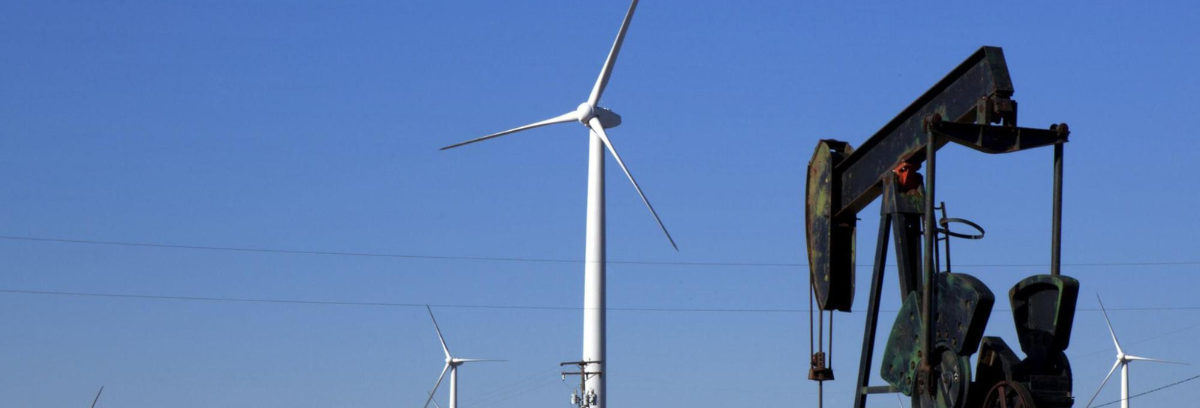
Driving across Texas recently, I found myself staring out the window at a fascinating sight.
Massive wind turbines towered over the landscape while, only a short distance away, oil pumps quietly nodded up and down.
At first glance, it seemed contradictory. Aren't these competing sources of energy? Yet there they were, working side by side.
That image stayed with me long after the road trip ended because I realized it wasn't really about energy. It was about leadership.
The Trap of False Choices
Many leadership challenges are presented as if we must choose between two competing values.
- Should leaders focus on people or performance?
- Should organizations prioritize stability or innovation?
- Should leaders project confidence or demonstrate humility?
- Should we embrace AI or preserve the human element?
These questions assume that one strength must come at the expense of another.
In my experience, that's rarely where exceptional leadership is found.
Fragmentation Begins with Either/Or Thinking
As I've continued developing the Leadership Poise framework, I've become convinced that fragmentation doesn't begin in our organizations. It begins in our thinking.
When leaders believe they must choose one virtue while abandoning another, they unintentionally create imbalance.
An organization obsessed with performance often loses its humanity.
An organization focused exclusively on relationships frequently struggles with accountability.
A leader who values certainty may stop listening.
A leader who values collaboration may avoid making difficult decisions.
The result is fragmentation.
Leadership Poise Creates Integrative Leadership
Leadership Poise isn't simply emotional composure. It is the internal capacity to integrate strengths that appear to compete.
Poised leaders don't see accountability and empathy as opposites. They understand that accountability without empathy creates fear, while empathy without accountability limits growth.
Poised leaders don't alternate between confidence and humility. They lead with confident humility. They don't choose between discipline and innovation. They create disciplined innovation.
This is what I call integrative leadership: the ability to hold complementary strengths together in ways that create greater energy than either strength could produce alone.

Systems Produce More Than Individual Parts
One of the great lessons from systems thinking is that healthy systems don't maximize a single variable. They optimize relationships.
The same principle applies to organizations. Culture improves when leaders stop asking, "Which is more important?" and begin asking, "How do these strengths reinforce one another?"
That subtle shift changes everything. Instead of choosing between people and performance, they create high-performing cultures where people flourish..
Instead of choosing between consistency and adaptability, they build organizations that are both resilient and agile.
Instead of choosing between human wisdom and artificial intelligence, they leverage both to make better decisions.
The greatest leaders don't eliminate tension. They transform it into energy.

The Leadership Poise Challenge
The Texas landscape taught me something I hope I never forget. Different sources of energy can coexist. Perhaps different leadership strengths can as well.
This week, ask yourself one question: Where have I accepted an "either/or" mindset when leadership is inviting me into a "yes/and" way of thinking?
That question may reveal the next step toward becoming a more poised, integrative leader.
Because fragmented leaders separate what belongs together. Poised leaders integrate what was never meant to be divided.